
Improve Team Alignment & Decision-Making Under Pressure

Are teams aligned in how they see and approach the same situation—especially under pressure?
The Problem
Organizations invest heavily in systems, processes, and KPIs—but often overlook a critical variable:
Are teams aligned in how they see and approach the same situation—especially under pressure?
When they’re not:
- People solve for different versions of the same situation
- Decisions slow down or fragment across teams
- Under pressure, decision rights and practiced sequences can splinter
A Simple Diagnostic
We start with a quick, anonymous check-in:
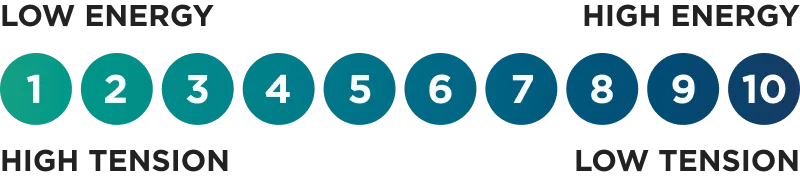
Clarity · Orientation · Rhythm · Energy (1–10)
- Small spread → aligned team with a shared starting point
- Large spread (3+ points) → hidden misalignment across perspectives
- Misalignment is often invisible until it impacts execution
The Intervention
We facilitate a structured session on one real situation:
- Make individual perspectives visible
- Align on “Where are we?” and “Where do we want to be?”
- Identify a shared, actionable best next step
What Changes
In a single session, teams typically:
- Move ~2 points closer to alignment
- Reduce variability in how they interpret the situation
- Accelerate decision-making on what to do next
Impact on Teams and Performance
When teams align on a shared situation:
- Decision-making becomes faster and more consistent
- Rework and miscommunication decrease
- Employee satisfaction and job performance improve through clarity
The Output
Each session produces a concise artifact:
Same Page Impact Brief (SPIB)
- Captures the situation, misalignment, and shift
- Documents the decision or best next step
- Creates a repeatable, shareable reference
Why It Matters
Misalignment isn’t a people problem—it’s a visibility problem.
- Execution improves across existing systems
- Friction decreases without adding process
- Leaders gain confidence under pressure
Alongside traditional performance metrics, we introduce a leading indicator of alignment—providing earlier insight into how teams are performing under pressure.
How to Start
- Select one important team, project, or decision
- Run a 5-minute CORE check-in
- If spread is high, run one focused session
Start with one situation that matters—no large rollout required.
SPIB (Example)
From 5–8 Misalignment to a Clear Decision Path in One Session — Mid-Sized Consumer Goods Company
Situation
A Director of Sales at a mid-sized consumer goods company was working to align internal stakeholders around a key commercial opportunity. Conversations were active, but progress was slow and inconsistent.
Where We Were (Before)
- Alignment spread: ~5–8 across stakeholders
- Different assumptions about priorities, risks, and next steps
- Ongoing discussions without clear convergence or decision
What We Did
Ran a focused CoreSelf Mapping (CSM) on one specific situation:
- Clarified how each stakeholder was interpreting the opportunity
- Made underlying assumptions and priorities visible
- Anchored the conversation around “Where are we?” and “Where do we want to be?”
What Changed
- Team recognized they were solving for different versions of the same situation
- A shared understanding of priorities and constraints emerged
- Alignment began to converge, reducing variability across perspectives
Outcome
- Alignment converged by ~2 points on a 1–10 scale (e.g., from a 5–8 spread toward a tighter range)
- Clear, shared direction on next steps
- Faster decision-making across stakeholders
- Reduced friction in follow-on conversations
Why It Mattered
The challenge wasn’t lack of effort—it was misalignment in perspective. Once visible, alignment occurred quickly and allowed the team to move forward.
Insight
When teams align on how they see and approach a situation, decision speed and execution improve—without adding process.
Try a CORE check-in with your team. See How.
Frequently Asked Questions
About the Authors
Tim Preston is co-founder of Simple. Not Easy., co‑creator of CoreSelf Framework, and co‑author of CoreSelf Positioning (2025). A former architect, entrepreneur, and business leader, he explores how individuals, teams, and organizations regain clarity, agency, and direction amid complexity and uncertainty.
Jonathan Thomas, MSW is a Bowen Family Systems practitioner, educator, co-creator of CoreSelf Framework, and co-author of CoreSelf Positioning (2025). Across five decades of work with children, parents, and families, he explored how people develop awareness, navigate relationships, and orient themselves during periods of challenge, change, and uncertainty.
Learn more about Jonathan, Tim & CoreSelf Positioning.