
Before We Optimize Organizations — Especially with AI — Are We Orienting the Humans Within Them?
Artificial intelligence is accelerating organizational capability at a historic pace.
Workflows are automated.
Forecasting is enhanced.
Customer data is synthesized in seconds.
Decision-support tools are embedded across departments.
Optimization has never been more powerful.
And yet something quieter is happening beneath the surface.
Leaders describe decision fatigue.
Professionals report cognitive overload.
Teachers report burnout.
Students report rising anxiety.
The issue is not AI.
The issue is sequence.
We are optimizing systems — increasingly with AI — without first orienting the humans
operating them.
Optimization Is a Force Multiplier
Optimization increases speed.
It increases visibility.
It increases output.
AI dramatically amplifies these gains.
But optimization does not automatically increase steadiness.
If a team operates from fatigue, optimization magnifies fatigue.
If leadership decisions are reactive, AI accelerates reactivity.
If priorities are unclear, dashboards amplify confusion.
AI scales judgment.
It does not replace it.
Which means the human state inside optimized systems matters more — not less — in an AI-
enabled era.
What We Rarely Measure
Organizations measure activity relentlessly:
Revenue
Calls made
Tickets closed
Utilization rates
Throughput
What is rarely measured is readiness.
- How clear are we on what matters most?
- How grounded are decision-makers under pressure?
- Is the team’s pace sustainable?
- What is the emotional energy behind performance?
Research in decision science shows that cognitive overload narrows thinking and
increases reactive responses. Neuroscience research on “affect labeling” demonstrates
that simply identifying or scaling emotional states reduces reactivity and strengthens
regulation.
In other words, measuring state stabilizes it.
And stabilized judgment produces better decisions.
A Practical CORE Orientation Reflex
Orientation does not require a retreat or workshop.
It can begin with four numbers.
On a scale of (low) 1–10 (high):
Clarity
How clear am I on what matters in this situation?
Orientation
Where am I — relative to where I want or need to be?
Rhythm
What is my current pace or cadence in relation to this task?
Energy
Where is my emotional energy to execute well right now?
Four numbers.
Ten seconds.
Morning and evening.
Think of it as a brief pattern interrupt before autopilot takes over.
That pause shifts the nervous system out of reactivity and back into intention.
AI as Resource, Not Replacement
AI can:
Surface workload patterns
Highlight inefficiencies
Aggregate trends
Recommend adjustments
But AI does not:
Regulate pressure
Replace courage
Clarify meaning
Restore depleted energy
AI amplifies whatever state humans bring into the system.
If leaders are steady, AI scales steadiness.
If leaders are reactive, AI accelerates volatility.
The differentiator is orientation.
From Optimized Systems to Self-Correcting Human Systems
Most organizations rely on external correction:
More reporting.
More oversight.
More metrics.
But high-functioning systems share another trait: internal correction.
When individuals pause to orient daily:
They recognize fatigue earlier.
They clarify priorities sooner.
They adjust rhythm before burnout sets in.
They reduce unnecessary escalation.
Teams stabilize.
Organizations begin to function as self-correcting human systems.
Optimization becomes more sustainable because it rests on steadier human judgment.
The Competitive Edge
In an AI-accelerated world, competitive advantage will not belong solely to the fastest
organizations.
It will belong to the steadiest.
Those who can:
Pause briefly.
Measure state.
Decide intentionally.
Then optimize.
Before we optimize organizations — especially with AI — the more important question may be
this:
Are we orienting the humans within them?
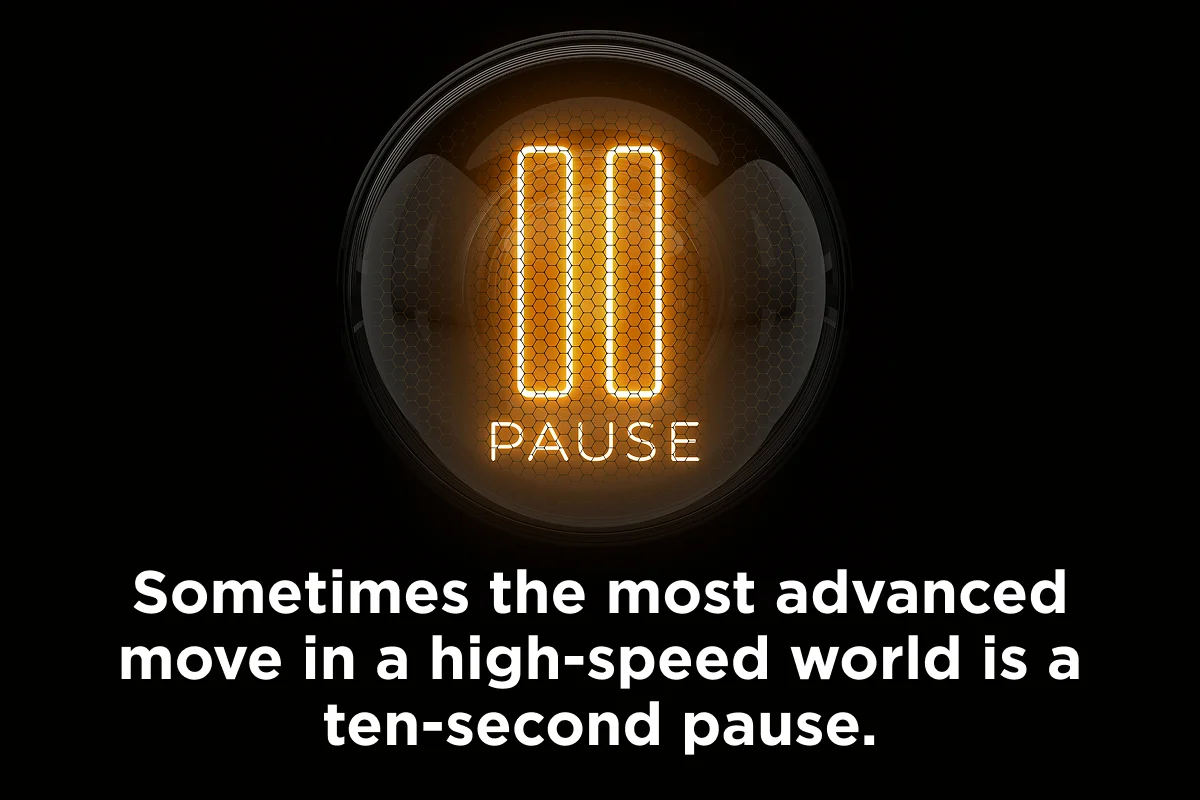
Sometimes the most advanced move in a high-speed world is a ten-second pause.
About the Authors
Tim Preston and Jonathan Thomas are co-authors and co-creators of the CoreSelf Framework
and the book CoreSelf Positioning: Getting on the Same Page with Yourself and Others.
Preston works with executive teams and growth organizations to improve clarity and
operational steadiness in high-pressure environments. Thomas brings over four decades of
clinical experience and continues to work with students, educators, and administrators to
develop lifelong orientation skills across generations.
About the Authors
Jonathan Thomas, MSW
Whether at the potter's wheel, coaching medical professionals and teams, or in his private counseling practice, Jonathan Thomas has spent his life molding, shaping and creating something beautiful and new.
Tim Preston
As a successful serial-entrepreneur and angel investor, Tim Preston has spent the majority of his life learning, overcoming, and creating, from blank pieces of paper: self, spaces, teams, and businesses.
Together, Jonathan and Tim founded Simple. Not Easy., LLC, a company that developed CoreSelf Positioning™ tools to help companies and individuals to slow down and align energy levels, values, and actions in order to formulate their best next steps.
Learn more about Jonathan, Tim & CoreSelf Positioning.